• Rotating Sensor
  • Rotating Sensor

Description

Advantage
The principle of shear force measurement and the mature concentration measurement method are suitable for most pulp types.
 Sensitive torque sensor, stable and reliable.
 In-pipe measurement, widely used. 
 Precise, stable, reliable and reproducible.
 Widespread application proves that the maintenance workload is low.
Low installation requirements.
Intelligent full touch instrument, easy to operate.
Introduction
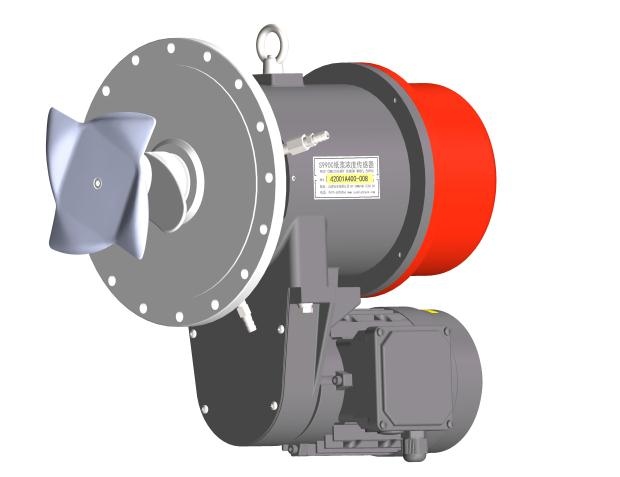
The sensor uses rotating shear force measurement, which has the advantages of high signal sensitivity, strong ability to resist zero drift, pulp flow rate change, shock vibration and other effects. S990C inner rotating consistency sensor is 
currently the most reliable and stable consistency sensor.
The sensor adopts the way of pipeline measurement, which is easy to install and easy to cooperate with the controller and DCS. The sensor has a strong structure and good measurement repeatability, and can give the full range of consistency value. It is suitable for all kinds of pulp measurement, and the measurement is not affected by fiber composition, beating degree, filler, bubble, pressure, vibration, etc.S990C Consistency Sensor uses microchip processor to directly convert the shear force signal into consistency, and considers the compensation of various influencing factors. The sensor has 16 built-in conversion curves, adapting todifferent process conditions, one-point calibration on site, convenient and accurate installation and adjustment. The sensor can give the absolute value of consistency in the full range. The sensor can be connected to the controller or DCS using a standard 4-20mA signal or 485 digital communication.
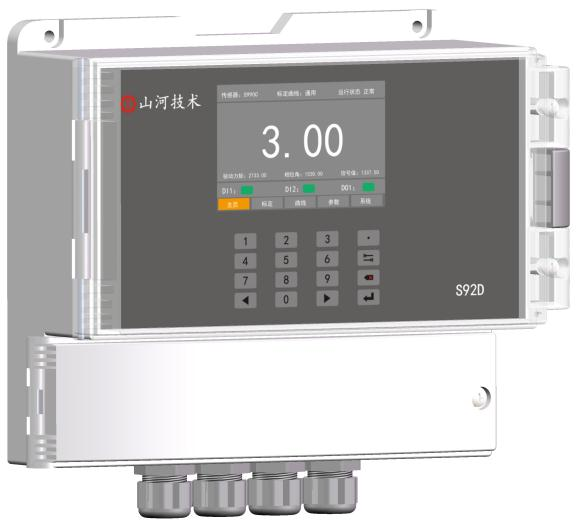
   The converter adopts a touch LCD screen, the man-machine interface is friendly, and the setting operation can be completed directly on the converter without the help of other auxiliary equipment.
Working principle 

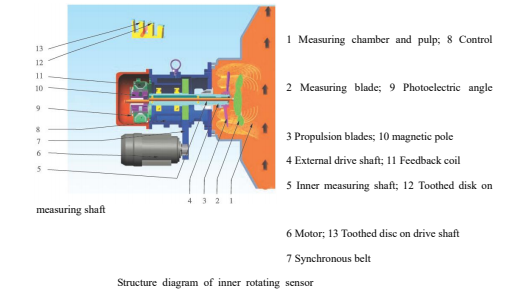
The sensor uses an active rotating shear force measurement method. It is composed of a driving motor, an external transmission shaft, a propelling slice, an inner measuring shaft, a sensitive blade, a driving line and a signal processing CPU. Under the control of the driving line, the motor drives the sensitive blade to rotate in the measuring room through the inner measuring shaft. When the pulp passes through the measuring chamber, the rotating sensitive blade moves relative to the pulp to form a shear force, which is related to the consistency. The shear force is measured by the feedback balance measurement method, and the shear force signal is calculated in the signal processing CPU to obtain the concentration value. The concentration value is sent to the computer or controller for use by a standard signal of 4-20mA
Performance index
Concentration measurement range: 1.0% ~ 16.0% by weight
Sensitivity: ± 0.005% concentration value
Repeatability of concentration measurement: ± 0.01% concentration value
Signal output: 4-20mA\ RS485
Media pressure: 1MPa\ 1.6 MPa\ 2.5 MPa
Sensor fluid contact material: 304\ 316L
Medium temperature: 5-100 ℃
Sensor operating temperature: 0-60°C
Instrument operating temperature: 0-50°C
Operating ambient humidity: 10-85%
Working voltage: converter AC220V50Hz drive motor AC380V50Hz;
Power consumption: less than 300W 
Sensor 

◆Liquid contact metal all 304/316 L stainless steel 
◆High-grade precision bearings 
◆Cast aluminum alloy body
◆High-quality synchronous drive wheels and belts
◆Corrugated tube cemented carbide mechanical seal 
◆Corrosion-resistant and aging-resistant seals
◆ High-quality drive motor
Converter 

◆High-definition touch LCD screen
◆Touch and keyboard dual mode
◆Chinese and English interface switching
◆Transparent protective cover
◆Built-in 16 application curves
◆High EMC circuit design
◆IP65 sealing grade 
Measuring cylinder
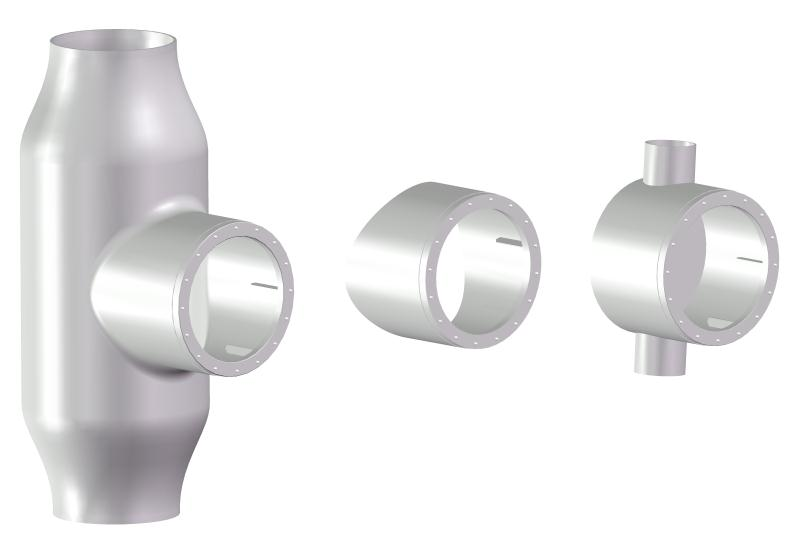
According to different process requirements, the S990C inner rotating sensor is equipped with three types of measuring cylinders, and each type of measuring cylinder is made of 304 and 316L, and special materials can be customized.Welded measuring cylinders are suitable for pipe diameters between DN100 and DN250, directly welded to metal pipes, and can be customized if flange connections are required.
When the pulp pipe is greater than or equal to 300, the welded measuring cylinder is no longer suitable, and the pipe measuring cylinder is required. The pipe type measuring cylinder is easy to install and does not affect the integrity of the pipe.
When the diameter of slurry tube is small and the flow rate is slow, small welded measuring cylinder can be selected

◆All stainless steel material
◆Surface sandblasting
◆Rear observation window
◆Inner polishing
Sensor size
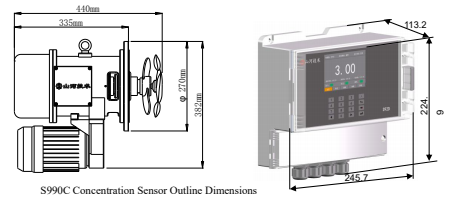
S990C inner rotating consistency sensor is composed of sensor, converter, measuring cylinder and other accessories. The dimensions of each part are shown in the figure below, in which the sensor weighs 36Kg and the converter weighs 1.5 Kg. 

Measuring blade
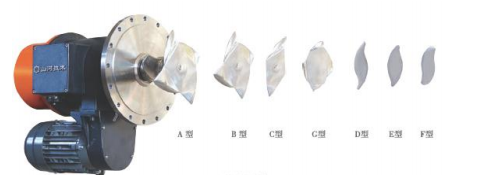
 The S990C inner rotating consistency sensor can measure the consistency range from 1.0% to 16%, and the sensor should choose different forms of measuring blades in different concentration ranges. The figure below shows several basic models, which can be 
customized if necessary.
The measuring blade is made of 316L material, and nylon injection molding material can also be used in special occasions.

Installation method
 The measured pulp has no turbulence, no backflow, no bubbles in the pipeline, moderate pressure in the pipeline, and no vibration in the pipeline, which are more conducive to the accurate measurement effect of the consistency sensor.
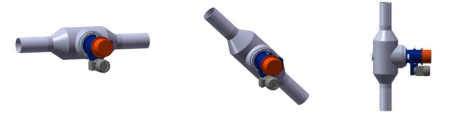
 Sensors can be installed on horizontal tubes, inclined tubes, and vertical tubes. Either way, the drive motor must be installed below.

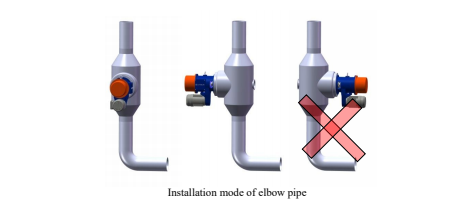
When the sensor is installed after the pipeline turns, the sensor installation direction should be consistent with the turning direction. As shown in the figure below, the first installation method is recommended, and the third installation method is not allowed.

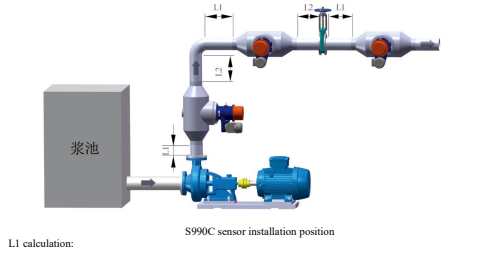
Turbulence will occur when the pipeline turns and the globe valve. When selecting the sensor installation position on site, it is necessary to ensure that there are enough long straight pipe sections before and after the sensor installation position. 

L1 calculation:
 Concentration ≤ 8%: L1 ≥ 1 m and L1 ≥ 3 × D; When concentration > 8%: L1 ≥ 0.5 m and L1 ≥ 
1.5 × D.
L2 calculation: L2 ≥ 0.5 m and L2 ≥ 1.5 × D.
L1: The minimum length of the straight pipe upstream of the sensor; L2: The minimum length of the 
straight pipe downstream of the sensor; D: Inside diameter of pipe;
Instrument interface
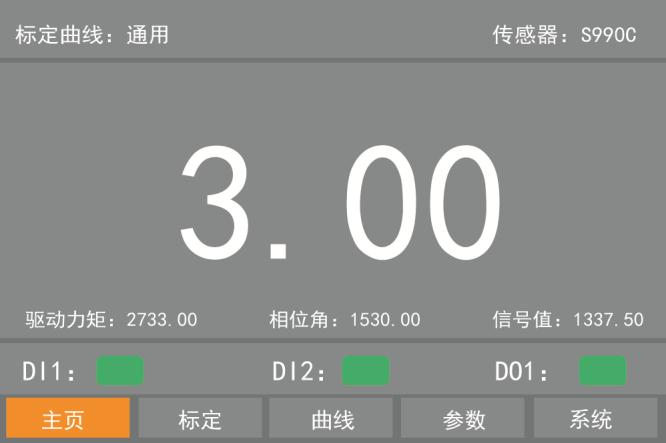
The converter user interface includes a 4-inch LCD true color display and 16 external physical keys. When the operation is adjusted, it can be operated by direct contact control or by physical keys.
The main interface can be displayed in Chinese or English. The system alarm directly flashes the cause of the fault, and the human-computer interaction is very friendly

Calibration mode
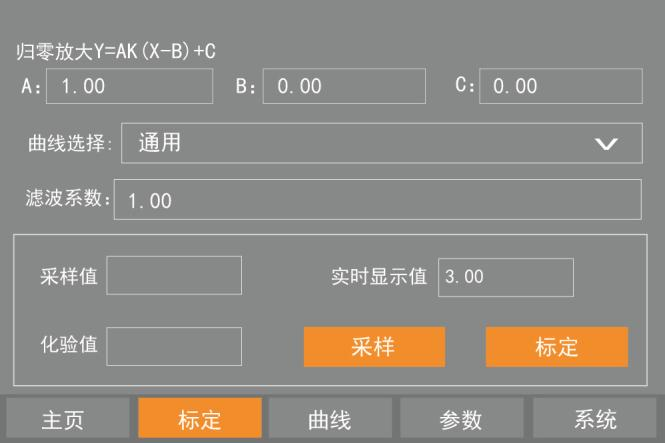
The converter has six built-in preset curves, which can achieve a little calibration for most process occasions. While taking the slurry sample from the slurry pipe, click the "sampling" key of the instrument, and the current concentration value is automatically recorded into the "sampling value" at this time. After the slurry sample test is completed, the laboratory concentration value is input into the "laboratory value", and then click the calibration key, the system automatically adjusts the deviation and realize one-key correction. 

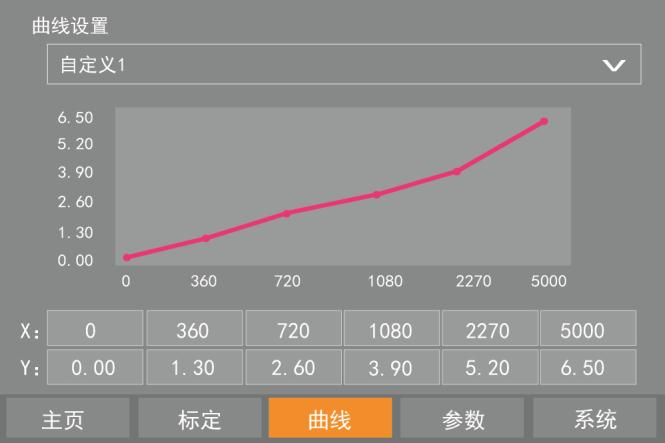
The instrument has 10 built-in custom calibration curves. For special pulp types or occasions where the process is frequently changed, multi-point calibration can be performed, and the corresponding curves can be directly called after the process is changed
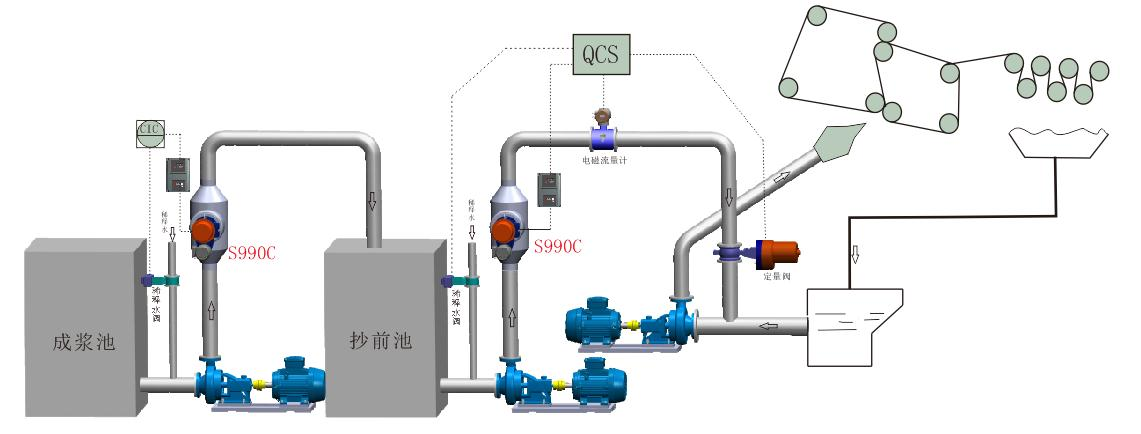
Application exampleThe S990C consistency sensor is a highly reliable product that has been tested in many occasions and can be used in important parts. The S990C inner rotating sensor can not only realize concentration control with the controller alone, but also be applied to QCS and DCS systems. The application of S990C consistency sensor in the key processes of paper machine, such as pre-mesh, pouring, pre-grinding, bleaching, continuous cooking and pulp mixing, can stabilize the consistency with high precision and obtain more stable product quality
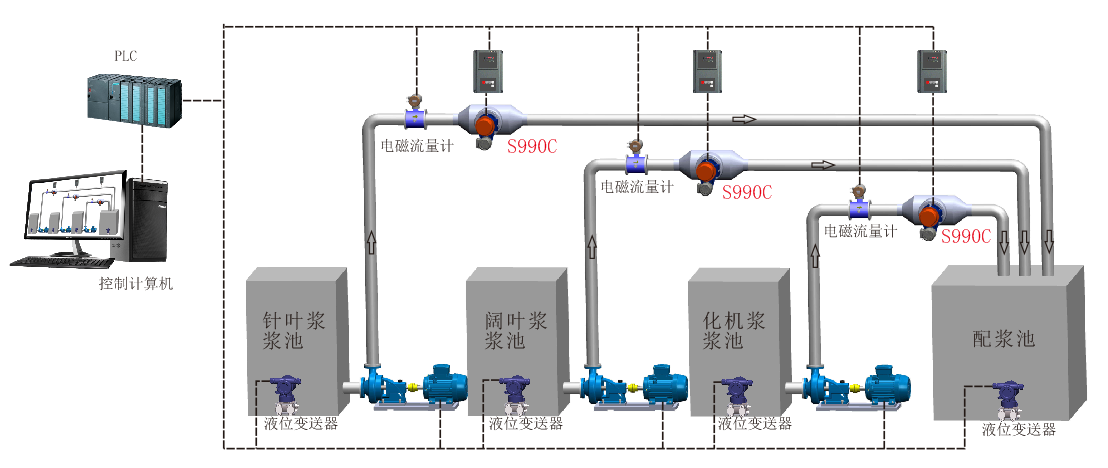
Pulp metering and proportioning system 
Measurement and Control of Consistency before Pulping and Surfing
Quality assurance
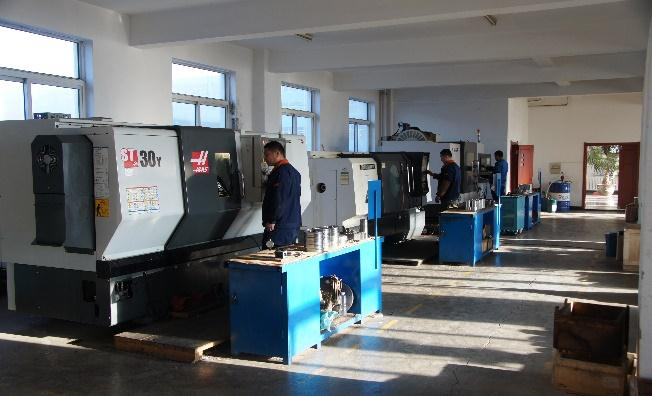
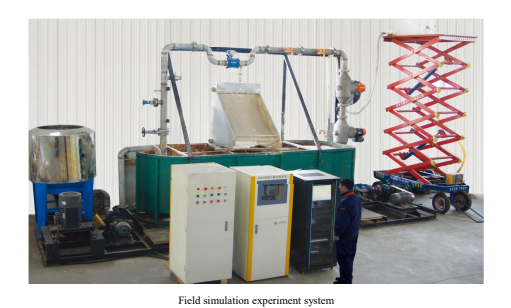
   Product parts are precision machined, key components are all CNC machined, parts, components, semi-finished products, finished products are strictly controlled in each process, finished products have to go through high temperature, vibration, pressing,loading, pulping operation and other assessments, and then through wooden boxes, cartons and other firm packaging before they can be shipped out of the factory.
    Product parts are precision machined, key components are all CNC machined, parts,components, semi-finished products, finished products are strictly controlled in each process, finished products have to go through high temperature, vibration, pressure, loading and other assessments, and then through wooden boxes, cartons and other solid packaging before they can be shipped out of the factory.
    All operations of the company are included in the ERP system management. Each part, semi-finished product, and finished product of the product has an independent serial number. For each product, all information such as material procurement, parts processing, finished product assembly, warehouse entry and exit records, sales process, and maintenance details are managed by the computer system. It can be queried, monitored, traceable, and early-warning information management at any time, and has sufficient guarantees for product control in the early stage, mid-term inspection, and later maintenance.

Precision machining


If you have any questions about our products or services, please contact us.
Your Requirements